
Common Tree Problems in the Treasure Valley
Trees don’t always make it obvious when something’s wrong. A little yellowing, some early leaf drop, a few holes in the bark — these can be easy to dismiss. But in most cases, the sooner a problem gets identified, the easier and less expensive it is to treat.
This page covers the most common tree health issues Brett sees in Boise and the Treasure Valley — what to look for, what’s causing it, and what can be done about it. If you’re not sure what you’re looking at, that’s exactly what an assessment is for.
Common Tree Problems
My tree’s leaves are turning yellow
Iron Chlorosis / Nutrient Deficiency
What to look for:
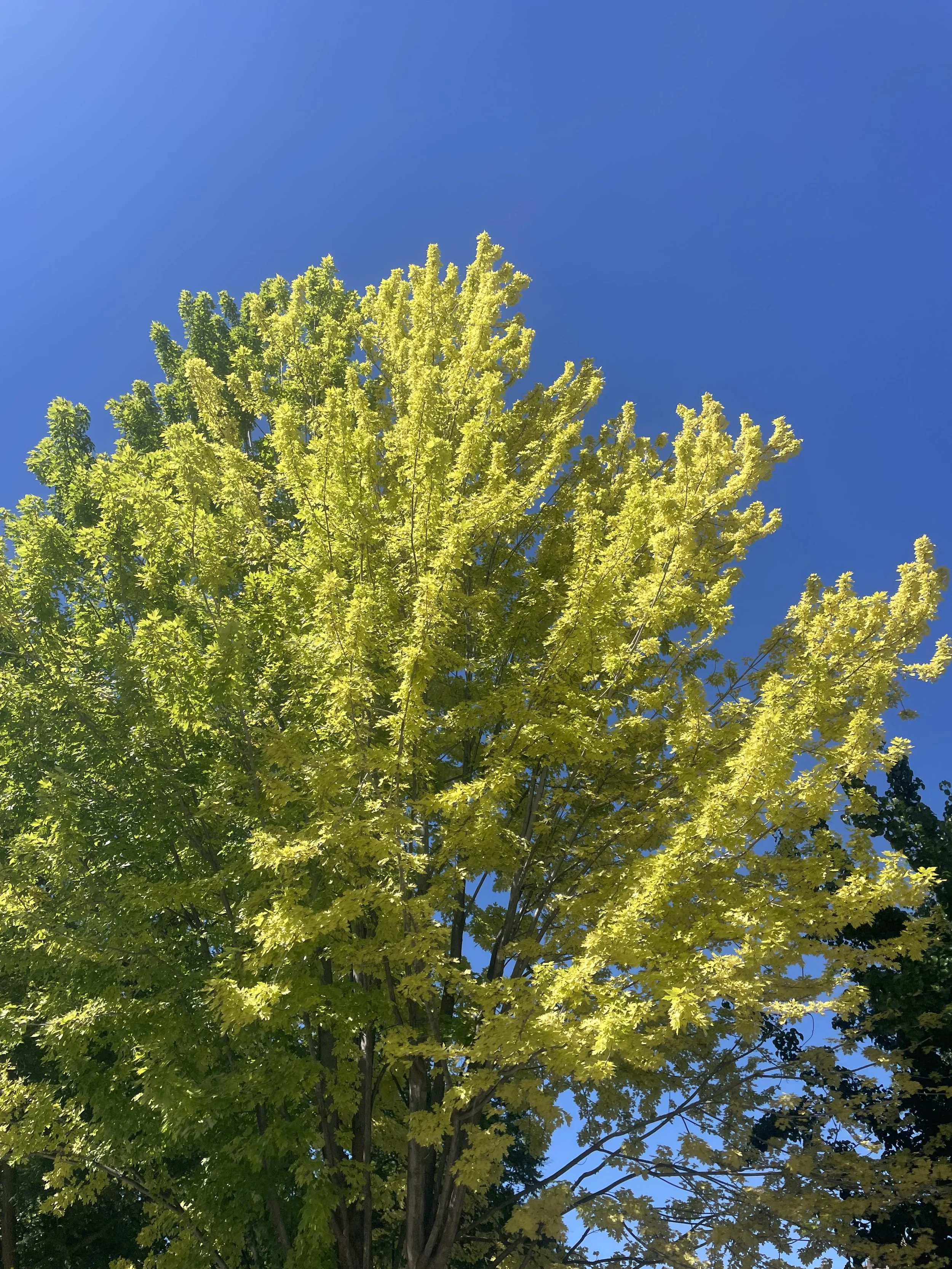
Leaves turning yellow while the veins stay green (interveinal chlorosis)
Stunted or sparse new growth
General decline over multiple seasons
Symptoms most visible in mid to late summer
Think your tree has Iron Chlorosis?
Yellowing leaves — especially when the veins stay green while the leaf turns yellow — is one of the most common tree health issues in the Treasure Valley. It’s usually caused by iron chlorosis, a condition where the tree can’t absorb enough iron from the soil.
The problem isn’t usually a lack of iron in the ground. Treasure Valley soils tend to run high in pH, and above certain pH levels, iron gets locked to soil particles where tree roots can’t access it. Maples, birch, oaks, and sweetgum are especially susceptible.
What can be done:
Iron chlorosis is treatable with systemic trunk injection or soil drench treatments that deliver iron directly to the root zone, bypassing the pH problem in the surrounding soil. Timing and product selection matter — an assessment will confirm what’s actually going on before any treatment is recommended.
My tree has bugs on it
Insect Infestation — Aphids, Scale, Borers & More
What to look for:
Sticky residue or black sooty mold on leaves or surfaces below the tree
White cottony masses on branches
Holes, frass (fine sawdust), or pitch masses on the trunk or bark
Stippled, distorted, or discolored foliage
Visible insects on leaves, stems, or bark
Seeing bugs on your tree?
Not all insects on your tree are a problem — but some are, and knowing which one you’re dealing with determines how to treat it. Different insects require different products and timing, and treating for the wrong pest wastes time and money.
Common insects Brett treats in the Treasure Valley:
Aphids — Small, soft-bodied insects that cluster on new growth and undersides of leaves. Often the first sign is sticky residue on leaves or surfaces below the tree (called honeydew), or black sooty mold growing on that residue. Aphid populations can build fast in spring and early summer.
Cottony Maple Scale — White, cottony masses on branches, most visible in late spring and early summer. Common on maples, honey locusts, and other shade trees in this area. Heavy infestations weaken the tree over time.
Borers (Lilac Borer, Flatheaded Borers & Others) — Boring insects tunnel into the trunk and branches, causing structural damage from the inside out. Look for small holes in the bark, sawdust-like frass at the base of the tree, or pitch masses on pines. Not all borers are the same — some are beetles, some are clearwing moths — and treatment varies significantly by species.
Lace Bugs, Leaf Miners & Others — Several other insects cause stippling, discoloration, or damage to foliage. Most are treatable with properly timed systemic or foliar applications.
What can be done:
Insect treatment depends entirely on correct identification. Brett will assess the tree on-site, identify the pest, and recommend the right treatment — whether that’s a systemic trunk injection, soil drench, or targeted spray.
My tree has holes or damage in the bark
Borer Damage / Bark Beetles
What to look for:
Small round or D-shaped exit holes in the bark
Fine sawdust or frass at the base of the tree or in bark crevices
Pitch tubes or resin masses on pines or other conifers
Cracked, sunken, or discolored patches of bark
Yellowing or dying branches, often starting at the top
Concerned about borer damage?
Holes in the trunk or branches, sawdust-like material at the base, or sections of bark that look sunken or discolored are often signs of wood-boring insects. Borers can be difficult to treat because they spend most of their life cycle inside the tree — by the time you see the damage, they’ve been there a while.
Early detection matters. A tree with early-stage borer damage can often be treated successfully. A tree with advanced structural damage may be beyond treatment — Brett will give you an honest assessment of where yours stands.
What can be done:
Depending on the species and severity, treatment options include systemic trunk injection or basal bark spray timed to the insect’s life cycle. An on-site assessment will determine whether treatment is viable and what approach fits your tree.
My tree has white or sticky stuff on it
Scale Insects / Aphids / Sooty Mold
What to look for:
White or cottony material on branches or bark (scale insects)
Sticky coating on leaves or on surfaces under the tree
Black, crusty buildup on leaves or branches (sooty mold)
Yellowing or premature leaf drop
Not sure what you’re looking at?
White cottony masses, sticky residue on leaves or surfaces below the tree, or black crusty buildup on foliage are all signs of sap-feeding insects at work — most commonly scale insects or aphids.
The black buildup (sooty mold) isn’t a disease itself — it’s a fungus that grows on the honeydew insects leave behind. It’s a useful indicator that something is feeding on your tree, even if you can’t see the insects themselves.
What can be done:
Depending on the species and severity, treatment options include systemic trunk injection or basal bark spray timed to the insect’s life cycle. An on-site assessment will determine whether treatment is viable and what approach fits your tree.
Mushrooms are growing at the base of my tree
Root Rot / Crown Rot / Fungal Disease
What to look for:
Mushrooms or fungal conks growing at the base of the trunk or on roots
Weeping, discolored, or soft bark at the base of the tree
Unexplained decline starting at the bottom of the canopy
A hollow sound when the lower trunk is tapped
Seeing mushrooms near your tree?
Mushrooms or fungal growth at the base of a tree, especially if accompanied by weeping or discolored bark, softness at the base of the trunk, or unexplained decline from the ground up, are often signs of root or crown rot. These are fungal diseases that attack the root system or crown of the tree and can cause serious structural instability if left untreated.
Not every mushroom near a tree is a death sentence — but it’s worth getting a professional look. Some fungal problems are treatable with timely fungicide applications, particularly in spring and fall. Others indicate a tree that has already lost significant structural integrity.
What can be done:
Fungal disease treatment is most effective when caught early and applied at the right time of year. Brett will assess the tree, give you an honest read on how advanced the problem is, and recommend treatment if it’s viable.
My tree’s leaves are turning brown or dropping early
Drought Stress / Fungal Disease / Anthracnose
What to look for:
Browning at leaf tips or edges (drought stress)
Irregular brown spots or blotches on leaves (anthracnose)
Early fall color or leaf drop across the whole tree
Browning concentrated on the south or west side of the canopy (sun scald)
Tree looking stressed?
Early leaf browning or premature leaf drop in summer or fall can have several causes — the most common in Treasure Valley are drought stress, fungal diseases like anthracnose, or sun scald on susceptible species.
Drought stress is common in our hot, dry summers — especially in trees that aren’t being deep-watered regularly. Symptoms include browning at the leaf tips or edges, early fall color, and general canopy thinning.
Anthracnose is a fungal disease that causes brown, irregular spots or blotches on leaves — often mistaken for drought or frost damage. It’s most active in cool, wet spring weather and can cause significant early defoliation in susceptible trees including ash, oak, maple, and sycamore.
Sun scald typically affects the south and west sides of the canopy — browning and die-back on the sun-exposed side of the tree, especially in maples.
What can be done:
Drought stress is often addressed with improved watering and soil care. Anthracnose and other fungal diseases can be treated with targeted fungicide applications. An assessment will confirm which issue you’re dealing with before any treatment is recommended.
My fruit tree is a mess — dropping fruit everywhere
Unwanted Fruit Production
What to look for:
Heavy fruit drop in summer or fall creating a mess underfoot
Fruit attracting bees, wasps, or wildlife
Staining on driveways, patios, or lawn
Tired of the mess?
Ornamental and fruiting trees — crabapples, ornamental pears, and others — can drop a significant amount of fruit every year, creating a mess in the yard and attracting insects and animals. A properly timed spring treatment can significantly reduce or eliminate fruit production without harming the tree.
Timing is everything with this treatment — it needs to be applied during a specific narrow window in spring when the tree is in bloom. Miss it, and you wait until next year.
What can be done:
A fruit inhibitor application in spring — timed precisely to bloom — can dramatically reduce fruit set. Brett will flag the right window for your specific tree species and get on the calendar in advance.